→
Menu
→
Menu
SHIMY
Completed
Project
4/6
social network
mobile app
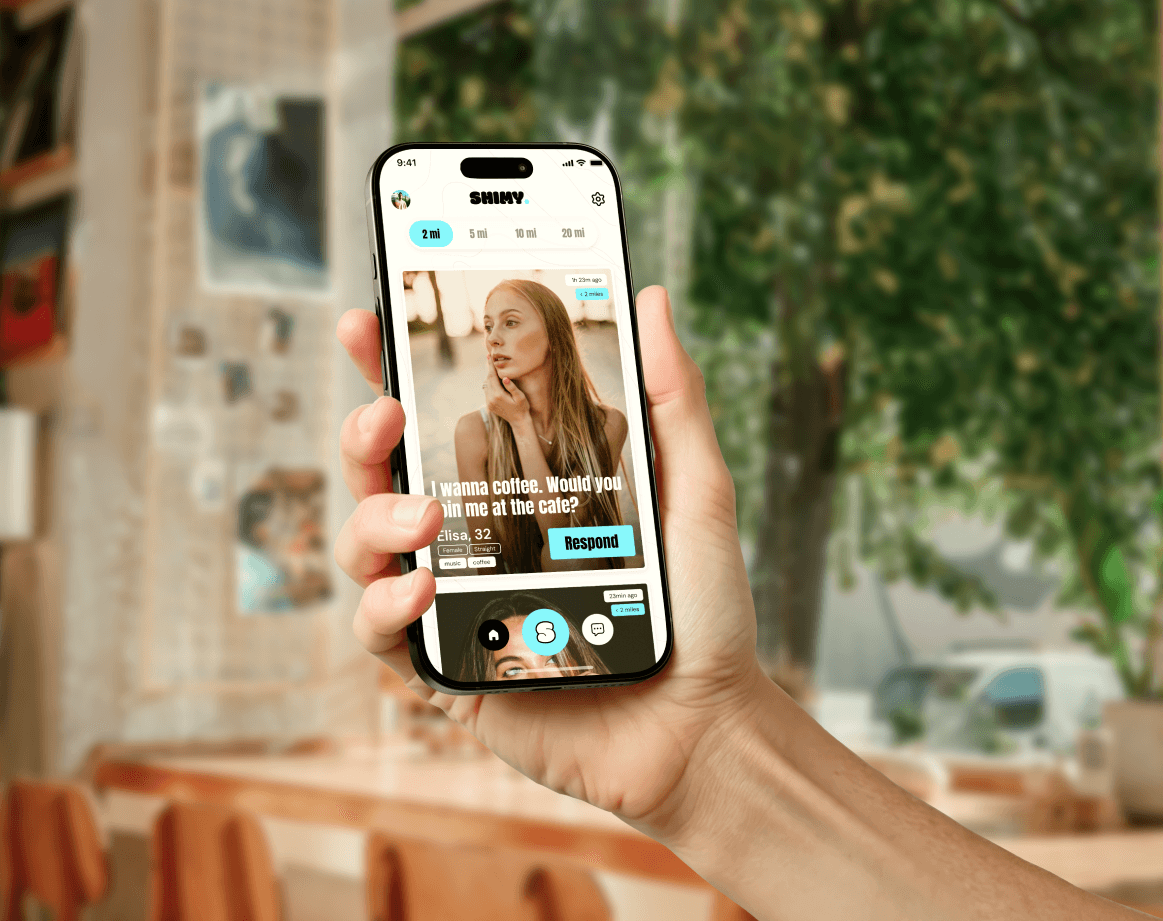
SHIMY is a location-aware dating platform designed for instant, real-time connections based on where you are right now. Members share fleeting selfie updates to broadcast their current spot, allowing people nearby to reply with a selfie of their own. As soon as the post creator accepts a reply, a direct chat opens up between them.
SHIMY is a location-aware dating platform designed for instant, real-time connections based on where you are right now. Members share fleeting selfie updates to broadcast their current spot, allowing people nearby to reply with a selfie of their own. As soon as the post creator accepts a reply, a direct chat opens up between them.
Team
Yellow media
role
ux/ui design
In numbers
200+ hours
90+ screens

no filters. no fakes. no catfish
→ challenge
Traditional dating platforms are bogged down by static profiles, endless swiping, and high friction, leaving users frustrated by outdated photos, fake accounts, and slow paths to conversation.
The objective was to design SHIMY—a high-intent, real-time, geo-based dating app that replaces passive browsing with active, live presence. The core challenge centered on balancing instantaneity and safety: how to build a low-friction discovery loop driven by ephemeral, live-captured selfie updates while maintaining strict identity verification (via Yoti) and preventing overwhelm, ultimately driving users from app open to an active conversation in under 10 minutes.
Traditional dating platforms are bogged down by static profiles, endless swiping, and high friction, leaving users frustrated by outdated photos, fake accounts, and slow paths to conversation.
The objective was to design SHIMY—a high-intent, real-time, geo-based dating app that replaces passive browsing with active, live presence. The core challenge centered on balancing instantaneity and safety: how to build a low-friction discovery loop driven by ephemeral, live-captured selfie updates while maintaining strict identity verification (via Yoti) and preventing overwhelm, ultimately driving users from app open to an active conversation in under 10 minutes.
→ My role
As the lead product designer driving the MVP from scratch, I took ownership of translating initial research into a cohesive application ecosystem tailored for real-time, location-based interaction.
Product Conceptualization & Styling: Defined the overarching visual identity and stylistic direction tailored to an ephemeral, live-presence product experience, ensuring an authentic and modern aesthetic.
User Journey Mapping & Prototyping: Architected end-to-end user flows optimized for speed—streamlining the path from app discovery and Yoti identity verification to live selfie broadcasting and chat activation within a sub-10-minute window.
Cross-Functional Collaboration: Partnered closely with the engineering team to evaluate technical constraints, discuss optimal implementation paths, and refine wireframes into scalable, developer-ready prototypes.
As the lead product designer driving the MVP from scratch, I took ownership of translating initial research into a cohesive application ecosystem tailored for real-time, location-based interaction.
Product Conceptualization & Styling: Defined the overarching visual identity and stylistic direction tailored to an ephemeral, live-presence product experience, ensuring an authentic and modern aesthetic.
User Journey Mapping & Prototyping: Architected end-to-end user flows optimized for speed—streamlining the path from app discovery and Yoti identity verification to live selfie broadcasting and chat activation within a sub-10-minute window.
Cross-Functional Collaboration: Partnered closely with the engineering team to evaluate technical constraints, discuss optimal implementation paths, and refine wireframes into scalable, developer-ready prototypes.
Design process
→ Discovery
Before shaping the UX architecture, deep-dive exploratory research was conducted to dissect the systemic flaws of legacy dating platforms—specifically static profiles, fake accounts, and high-friction matching loops. By analyzing current market limitations and user frustrations around authenticity and fatigue from endless swiping, the research established a clear product direction: moving away from asynchronous browsing toward high-intent, live-presence discovery.
This foundation informed the core product pillars for SHIMY: anchoring user trust through mandatory identity verification, prioritizing ephemeral, live-captured visual updates over curated media, and engineering a streamlined user journey capable of converting app discovery into an active conversation.
Before shaping the UX architecture, deep-dive exploratory research was conducted to dissect the systemic flaws of legacy dating platforms—specifically static profiles, fake accounts, and high-friction matching loops. By analyzing current market limitations and user frustrations around authenticity and fatigue from endless swiping, the research established a clear product direction: moving away from asynchronous browsing toward high-intent, live-presence discovery.
This foundation informed the core product pillars for SHIMY: anchoring user trust through mandatory identity verification, prioritizing ephemeral, live-captured visual updates over curated media, and engineering a streamlined user journey capable of converting app discovery into an active conversation.
→ target audience
SHIMY is designed for urban singles and socially active digital natives (ages 22 to 35) who are burnt out on the endless swiping, static profiles, and high friction of traditional dating apps.
The user base consists of spontaneous, authenticity-seeking professionals who value real-time presence and immediate connection over curated, outdated content. Whether they are actively broadcasting their current location to meet someone nearby, quickly responding to live nearby updates, or evaluating the platform as new explorers, they share a common core need: low-friction discovery, verified authenticity, and a fast path from digital visibility to actual, in-person engagement.
SHIMY is designed for urban singles and socially active digital natives (ages 22 to 35) who are burnt out on the endless swiping, static profiles, and high friction of traditional dating apps.
The user base consists of spontaneous, authenticity-seeking professionals who value real-time presence and immediate connection over curated, outdated content. Whether they are actively broadcasting their current location to meet someone nearby, quickly responding to live nearby updates, or evaluating the platform as new explorers, they share a common core need: low-friction discovery, verified authenticity, and a fast path from digital visibility to actual, in-person engagement.

Features and flows
→ verification
Verification is a crucial component of trust. Let's be honest, nobody wants to show up to a date and realize they aren't meeting the person who was chatting with them online. That’s why the app features verification powered by Persona. This method is completely confidential, as Shimy does not store any of your documents.
Verification is a crucial component of trust. Let's be honest, nobody wants to show up to a date and realize they aren't meeting the person who was chatting with them online. That’s why the app features verification powered by Persona. This method is completely confidential, as Shimy does not store any of your documents.
→ Feed
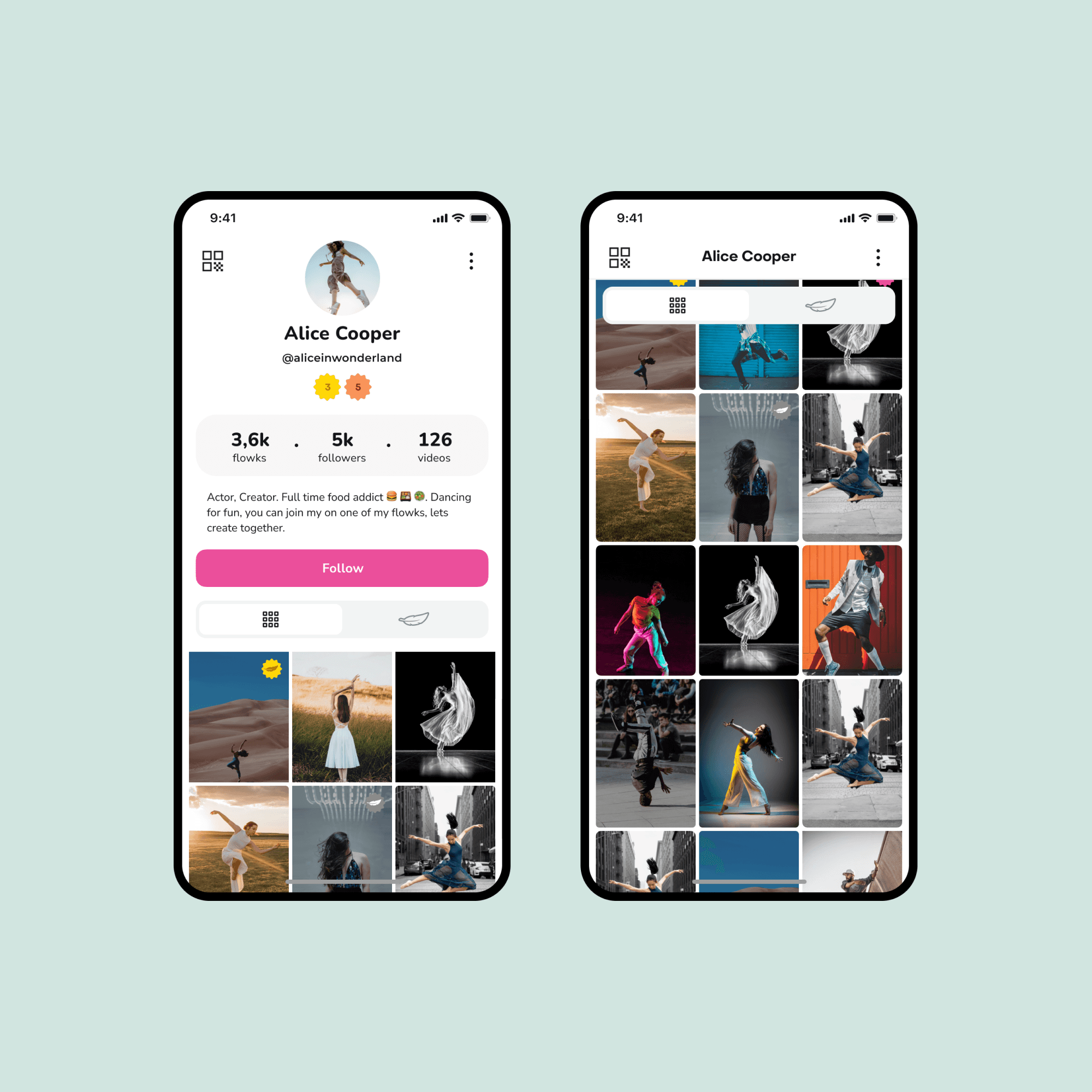
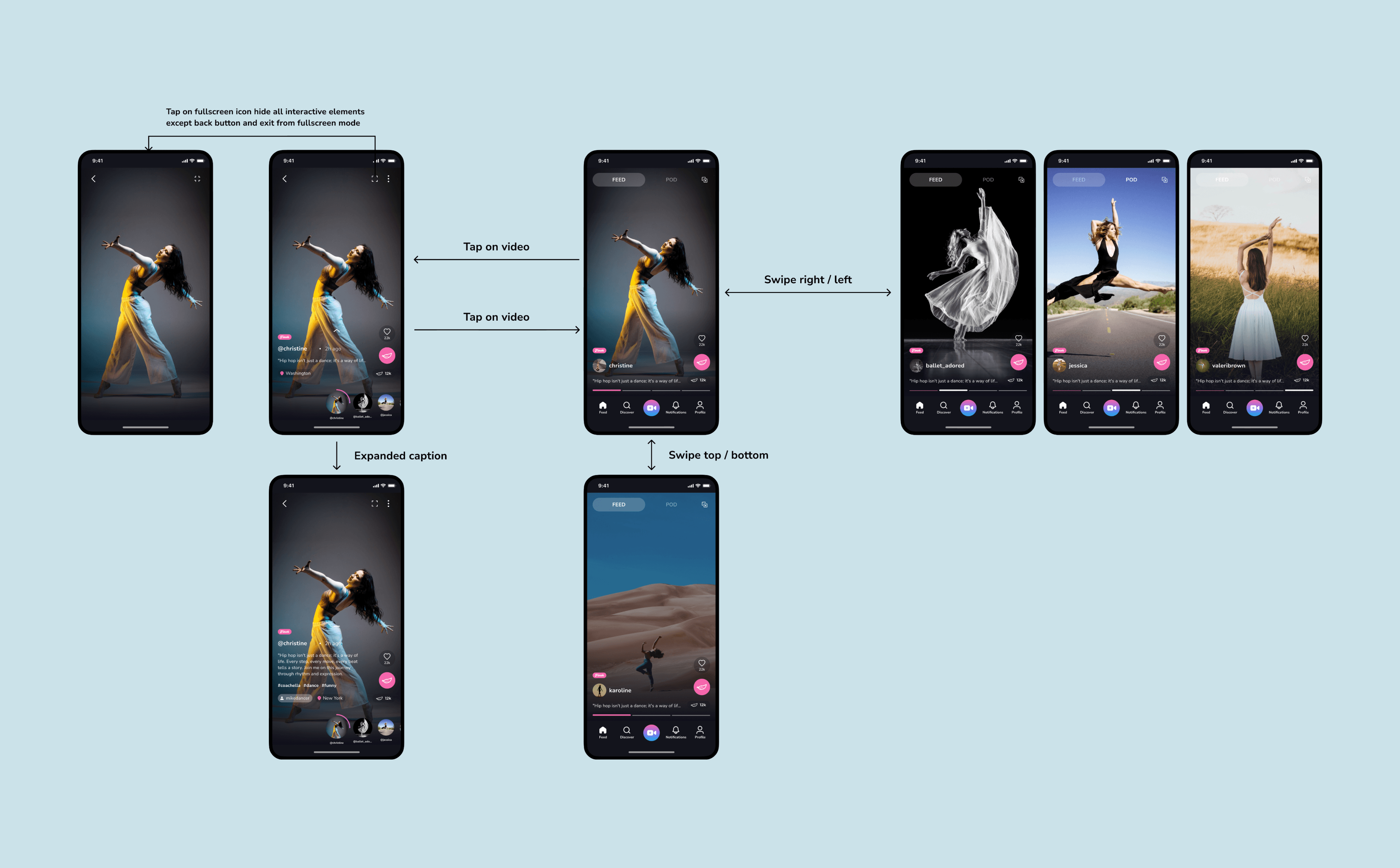
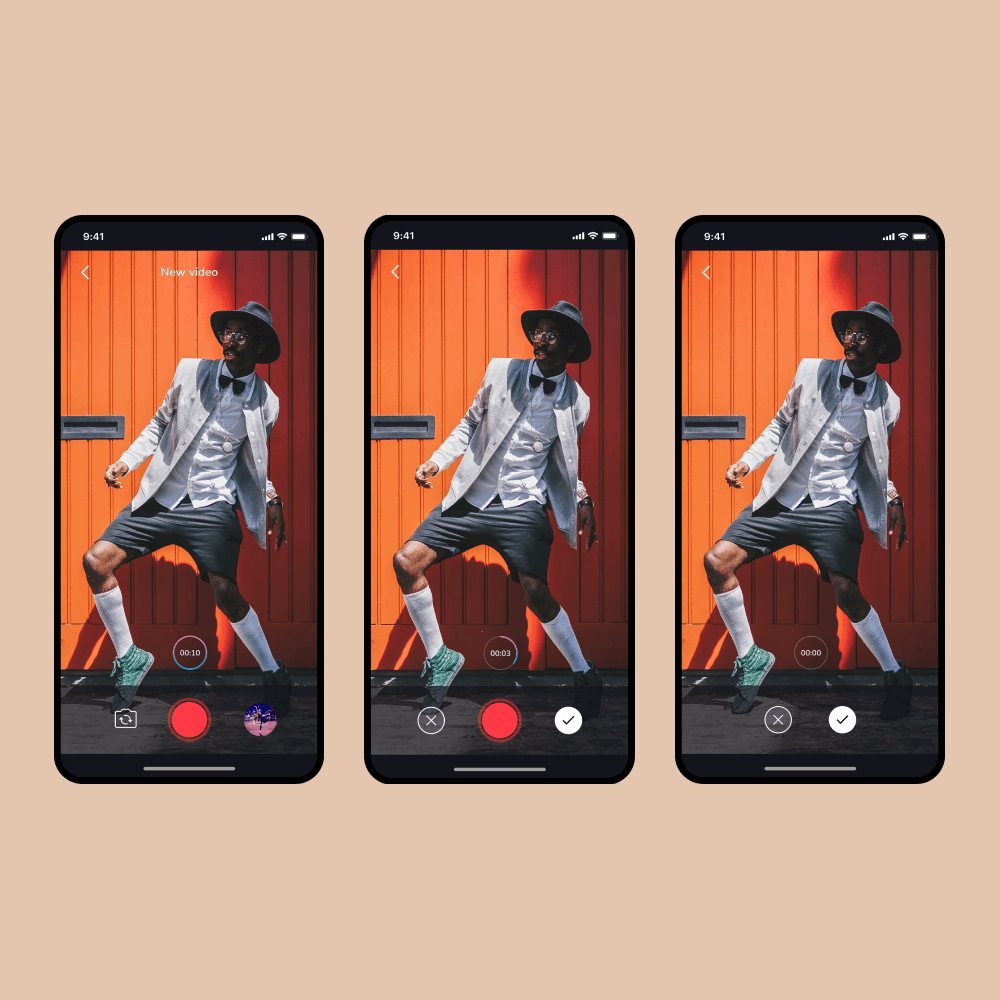
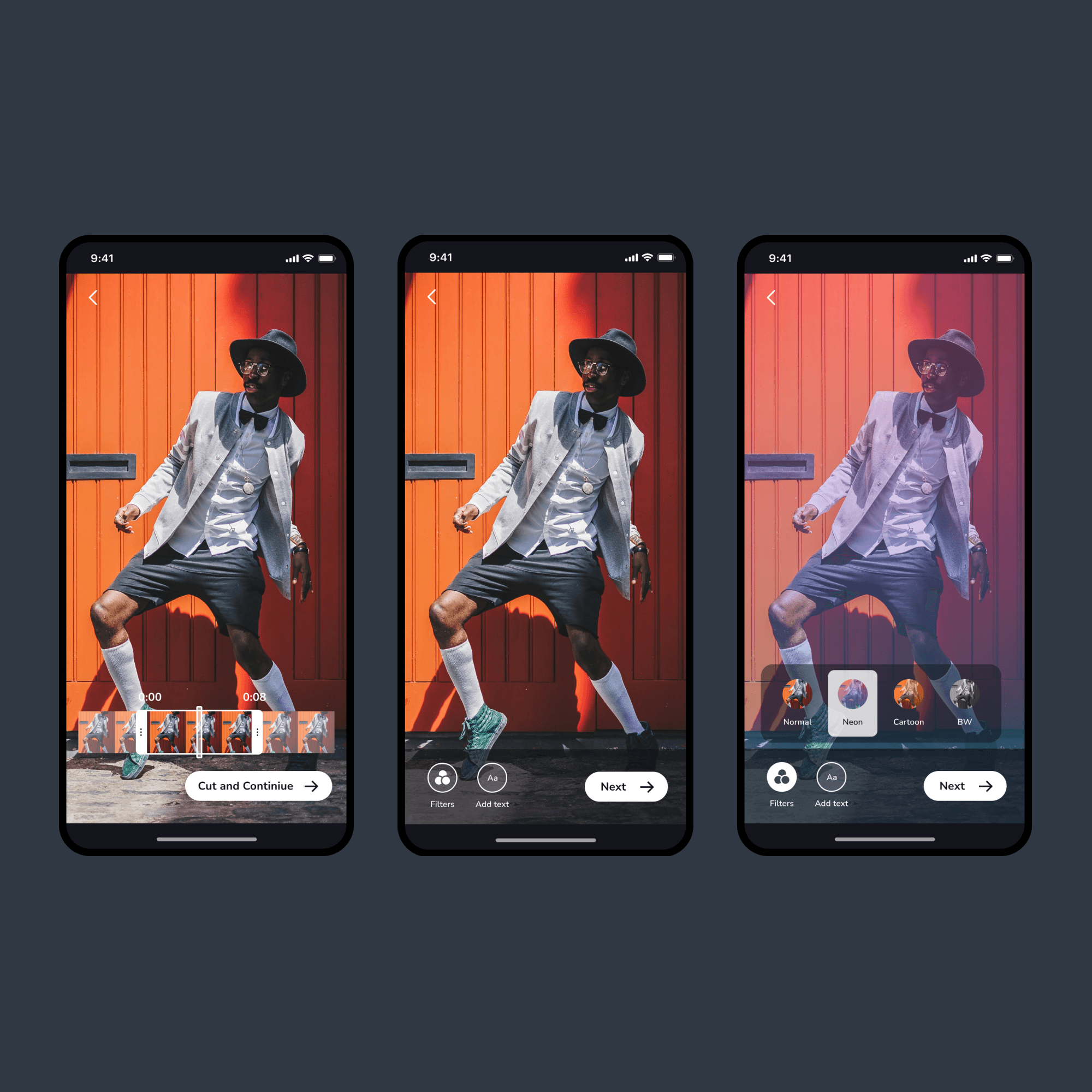
The feed is where users spend the most time, making it crucial to maintain familiar interaction patterns while introducing a fresh approach to displaying and engaging with content.
My task was to balance these aspects effectively. The result is the user journey illustrated in the image below.
The feed is where users spend the most time, making it crucial to maintain familiar interaction patterns while introducing a fresh approach to displaying and engaging with content.
My task was to balance these aspects effectively. The result is the user journey illustrated in the image below.
→ make a post
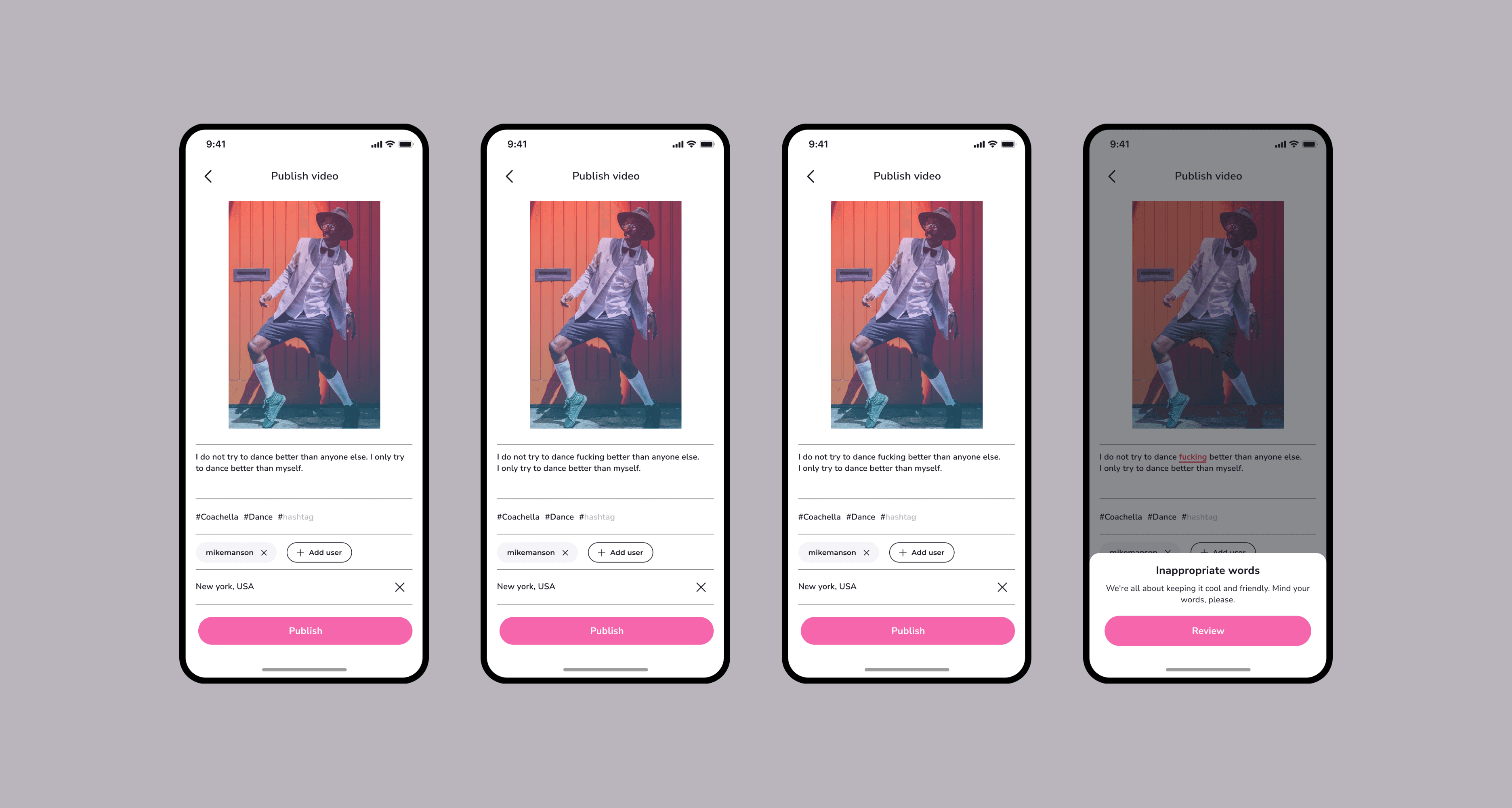
Before publishing a video, users can add a standard set of optional information to their video or flow:
Description
Hashtags
Tag Other Users
Location
To maintain a friendly and positive atmosphere within the platform, a profanity filter has been implemented. If offensive language is detected, the system prompts the user to revise their content; otherwise, the video cannot be published.
Before publishing a video, users can add a standard set of optional information to their video or flow:
Description
Hashtags
Tag Other Users
Location
To maintain a friendly and positive atmosphere within the platform, a profanity filter has been implemented. If offensive language is detected, the system prompts the user to revise their content; otherwise, the video cannot be published.
→ feed and match
Before publishing a video, users can add a standard set of optional information to their video or flow:
Description
Hashtags
Tag Other Users
Location
To maintain a friendly and positive atmosphere within the platform, a profanity filter has been implemented. If offensive language is detected, the system prompts the user to revise their content; otherwise, the video cannot be published.
Before publishing a video, users can add a standard set of optional information to their video or flow:
Description
Hashtags
Tag Other Users
Location
To maintain a friendly and positive atmosphere within the platform, a profanity filter has been implemented. If offensive language is detected, the system prompts the user to revise their content; otherwise, the video cannot be published.
→ chats and ai companion
Before publishing a video, users can add a standard set of optional information to their video or flow:
Description
Hashtags
Tag Other Users
Location
To maintain a friendly and positive atmosphere within the platform, a profanity filter has been implemented. If offensive language is detected, the system prompts the user to revise their content; otherwise, the video cannot be published.
Before publishing a video, users can add a standard set of optional information to their video or flow:
Description
Hashtags
Tag Other Users
Location
To maintain a friendly and positive atmosphere within the platform, a profanity filter has been implemented. If offensive language is detected, the system prompts the user to revise their content; otherwise, the video cannot be published.
Key takeaways
This ongoing project has provided an opportunity to dive into the world of social media, explore user interactions with this type of application, and develop the functionality of a basic app version. The current version is designed as a foundation for future improvements and enhancements.